Marco Island Florida Bridge Toll Plan
Marco Island, FL Bridge Toll Plan
Analysis Using FY 2025–2026 Budget Data
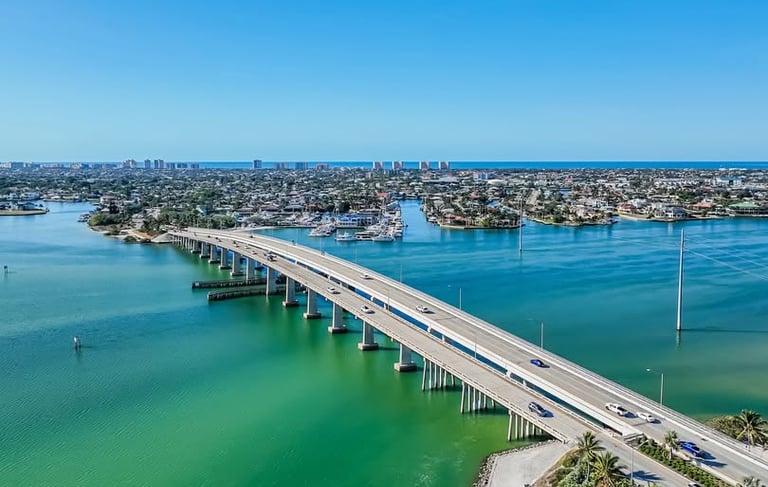
In 2025, a Marco Island council member proposed a bridge toll as the City faced mounting pressures. Ongoing canal dredging, a potential bus route, and a proposed 33% millage increase were under discussion. Meanwhile, homeowners already faced steep HOA fees and rising hurricane-related insurance costs, making a tax increase difficult. Notably, property values amongst Florida, especially in the SWFL region, have been rapidly decreasing since their 2022 highs. Although the toll wasn’t adopted, I wanted to examine its potential financial and accounting impact.
I used the City’s FY 2025–2026 adopted budget. If a toll were implemented at $1 per vehicle, with 20,000 vehicles per day and 95% collection efficiency, annual revenue would approximate $6.9 million. This toll revenue would be classified as charges for services. Under governmental accounting standards, it would likely be booked in a special revenue fund, restricted to infrastructure spending.
The City uses fund accounting, where each fund is a separate accounting entity. On modified accrual, revenues are recognized when measurable and available (page 5). The council would appropriate this revenue annually based on fund-level budgetary control (page 3).
Comparing the toll to the City’s financials: the FY 2026 General Fund is $34.1 million, and property taxes are $22.6 million (page 9). A $6.9 million annual toll would equal about 20% of General Fund revenue and roughly 30% of current property tax collections. This is meaningful in easing reliance on taxes, but not so large as to replace them.
Infrastructure needs are ongoing. The City budgets $3.7 million for Public Works and $7.6 million for capital projects (page 10). The City also budgets $500,000 annually for bridge rehabilitation, with a 5-year total of $3 million (page 41). A $6.9 million annual inflow could fully cover bridge maintenance and contribute to larger infrastructure reserves or capital appropriations.
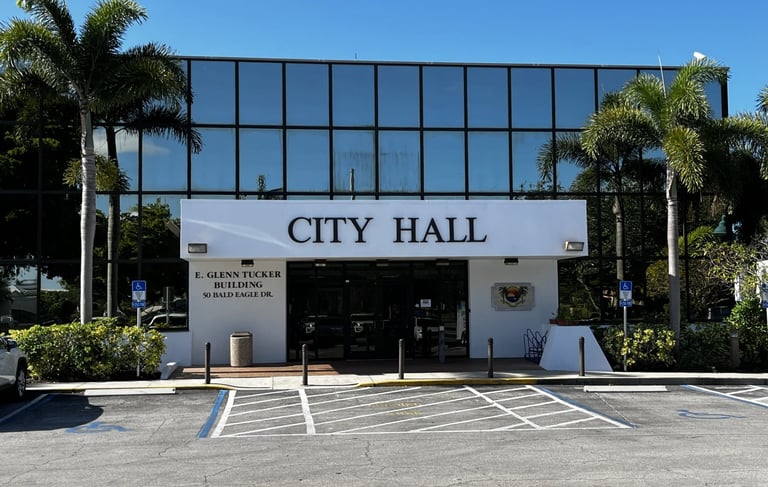
In the context of the proposed 30% millage increase, which would add roughly $6–7 million to property tax revenue, the toll closely matches that need. Instead of placing the full burden on property owners, this revenue stream would provide a stable funding source to reduce that reliance.
In summary, a $1 toll, producing $6.9 million annually, would be a substantial revenue source. Recorded in a governmental fund and recognized on modified accrual, it would allow the City to fund key infrastructure while alleviating future pressure from property taxes on residents.